COVID Box
Date
2020
Designer
Dr. Alyssa WongCategory
MiscellaneousFor clinicians, inserting a tube into the airway of a COVID-19 patient is a high-risk procedure.
It usually means front-line workers are staring right into someone’s open mouth, and directly in the line of fire, should a sudden cough send virus-filled droplets flying.
And with more patients needing help breathing, the risk is growing.
“We’re seeing week-by-week, day-by-day, patients are getting sicker, more patients being admitted, and more patients are being put on respiratory support and a ventilator,” says Dr. Alyssa Wong, an emergency physician with Trillium Health Partners in Mississauga, Ont.
Wong started wondering about the dangers facing her peers, and she wasn’t the only one.
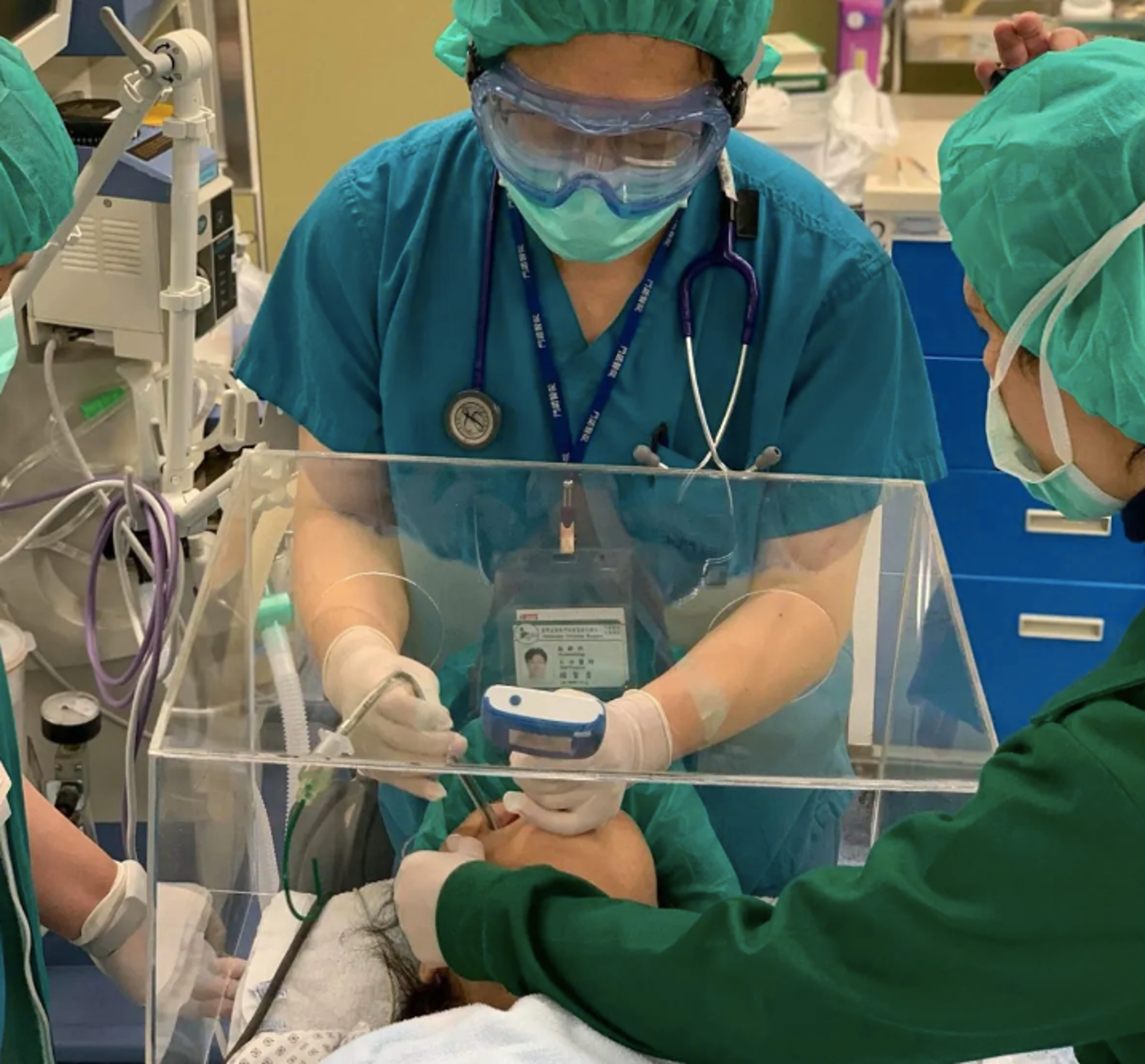
In a WhatsApp group for physicians, where COVID-19 articles were flying back and forth, her colleague Dr. Daniel Shogilev shared coverage of a doctor in Taiwan who’d developed a transparent plastic shield to cover patients during intubation, helping reduce the risk to clinicians.
That was a few weeks ago in mid-March. Wong knew some people outside the medical community who might be able to help make the concept a reality in Canada, and a small team hoping to develop what they’ve since dubbed the “COVID Box” met on a Zoom teleconference the next day.
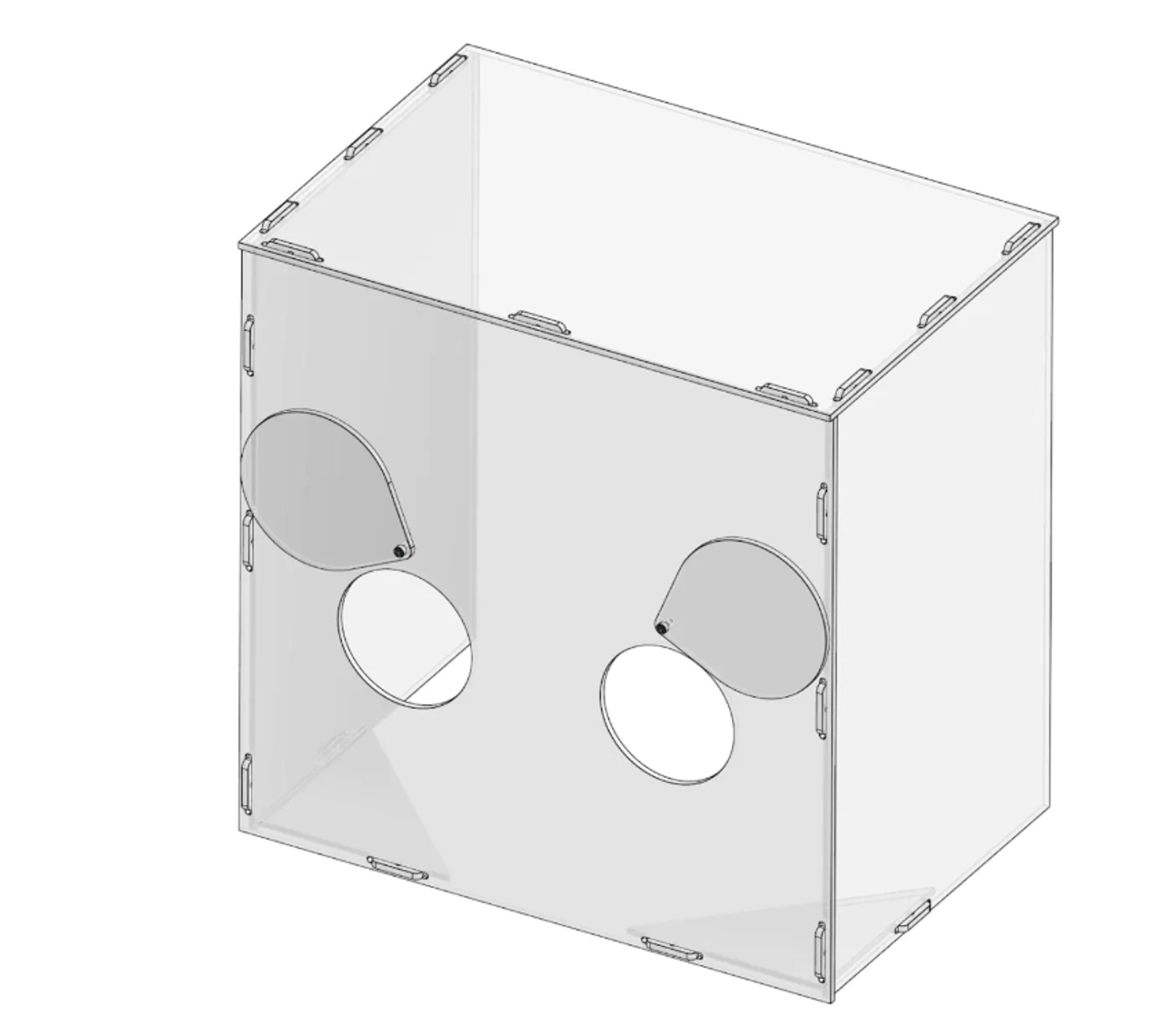
Since then, the little volunteer coalition of clinicians, entrepreneurs and tech company founders has [designed and tested their cube-shaped shield](https://www.covidbox.org/home), inspired by the [open-source design](https://sites.google.com/view/aerosolbox/design?authuser=0) from Dr. Hsien Yung Lai in Taiwan. Thanks to funding and support from Norris’s company, along with Trillium Health and architectural fabrication firm Eventscape, the team has built more than 20 prototypes of the polycarbonate device, and started sending them around to hospitals across the GTA.
In the Wellington Street West office of Taplytics , Norris and Phillips show how easy the COVID boxes are to build.
The sturdy, transparent sheets come flat-packed and can be assembled in minutes, with three pieces connecting to form a shield that’s held together by zip-ties, with two circular holes at the front where clinicians can insert their arms to intubate each patient.
After each procedure, the team says the boxes can be quickly disassembled and easily disinfected with medical-grade cleaners.
“The challenge we’ve seen is the cost of polycarbonate in the last week has basically doubled,” Norris says, noting the growing popularity of plastic shields for cashiers and other workers dealing with the public amid the ongoing COVID-19 pandemic.
That hike brought the production cost up to around $200 per box.